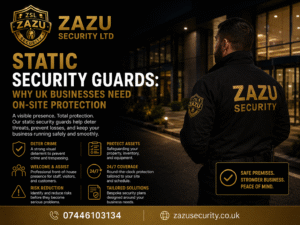


In the UK, venues and events rely heavily on professional security teams to create a safe, controlled and welcoming environment. Whether it is a nightclub, private party, corporate event, live music venue, wedding, sports gathering or community function, safety must always come first. This is where professional door supervisors play a vital role.
Door supervisors are often the first people guests see when they arrive and the last people they notice when they leave. Their role is not only to stand at the entrance, but to protect people, manage risks, support venue staff and prevent problems before they escalate. For businesses looking for reliable door supervision UK, experienced officers can make the difference between a smooth event and a stressful, unsafe situation.
What Does a Door Supervisor Do?
A professional door supervisor is responsible for maintaining safety and order at venues and events. Their duties may include checking tickets or guest lists, managing queues, monitoring entry points, preventing unauthorised access, identifying suspicious behaviour, helping vulnerable guests and supporting emergency procedures.
For UK venues, compliance is also important. GOV.UK guidance explains that private security staff such as door supervisors may need the correct SIA licence, and organisers can check whether security staff have a valid licence through the official SIA register. This makes it essential for businesses to work with a professional security company that provides trained, licensed and reliable staff.
1. Controlling Entry and Preventing Unauthorised Access
One of the most important parts of venue security is controlling who enters the premises. A professional door supervisor ensures that only authorised guests, customers, staff or contractors are allowed inside.
At events, this may involve checking tickets, wristbands, invitations or ID. At licensed venues, door supervisors may also help enforce entry policies and support management decisions around refusal of entry.
Effective access control helps prevent overcrowding, reduces the risk of theft or disorder and protects both guests and staff. When entry points are properly managed, the whole venue becomes safer and easier to control.
2. Managing Queues and First Impressions
A busy queue outside a venue can quickly become a safety issue if it is not managed correctly. Poor queue control can lead to pushing, frustration, blocked pavements, noise complaints and conflict before guests even enter.
Professional door supervisors manage queues in a calm and organised way. They communicate clearly, keep people moving, prevent line-jumping and help guests understand entry procedures. This creates a better first impression and reduces pressure on venue staff.
For businesses, this is especially important because customer experience starts at the door. A polite, professional and confident door supervisor helps guests feel safe and respected from the moment they arrive.
3. Preventing Conflict Before It Escalates
A key part of event security is conflict prevention. Large crowds, alcohol, long waiting times and high emotions can sometimes create tension. Professional door supervisors are trained to identify early warning signs, such as aggressive body language, arguments, intoxication or unusual behaviour.
Instead of reacting only when a problem becomes serious, experienced officers use communication and de-escalation techniques to calm situations early. They may separate individuals, speak calmly, offer guidance or involve venue management when needed.
This approach helps prevent fights, damage, complaints and disruption. It also protects the reputation of the venue or event organiser.
4. Supporting Crowd Management
Crowd safety is one of the biggest challenges at events and busy venues. Door supervisors help maintain safe movement around entrances, exits, stairways, corridors and restricted areas. They can also support one-way systems, emergency exit routes, VIP areas and backstage access points. At larger events, door supervisors may work alongside stewards, event managers and emergency services to ensure people move safely and efficiently.
Good crowd management reduces the risk of overcrowding, panic, injury and confusion. For festivals, concerts, sporting events and private functions, this level of planning is essential.
5. Protecting Staff and Customers
Venue staff often deal with difficult customers, busy service areas and high-pressure situations. Door supervisors provide an added layer of protection and reassurance.
If a member of staff feels threatened, notices suspicious activity or needs support removing a disruptive person, professional security officers can respond quickly. Their visible presence also acts as a strong deterrent against anti-social behaviour, theft and violence.
For customers, seeing trained door supervisors on site helps create confidence. Guests are more likely to relax and enjoy the event when they know safety is being taken seriously.
6. Responding Quickly to Emergencies
Emergencies can happen at any time. A guest may become unwell, a fire alarm may activate, a fight may break out or an evacuation may be required. Professional door supervisors are trained to remain calm and act quickly under pressure.
Their role may include guiding people to exits, assisting vulnerable guests, communicating with event organisers, supporting first aid teams and helping emergency services access the site.
SIA guidance also states that door supervisor licence applicants must have the relevant licence-linked qualification, and GOV.UK notes that a first aid qualification is required before taking door supervisor licence-linked training.
This training background helps door supervisors respond more effectively when safety matters most.
7. Maintaining a Professional Image
Security should never feel intimidating or unprofessional. The best door supervisors combine authority with customer service. They are visible, approachable, well-presented and respectful.
For venues, this matters because security staff represent the business. A rude or aggressive approach can damage the customer experience, while a professional and discreet approach builds trust.
This is especially important for hotels, corporate events, weddings, private parties and high-end venues where presentation and professionalism are just as important as protection.
8. Reducing Risk for Venue Owners and Event Organisers
Hiring professional door supervisors helps reduce risk. They can support safety plans, enforce venue rules, manage incidents and keep accurate reports when something happens.
Incident reporting is important for insurance, licensing, internal reviews and future planning. A professional security company can help venues understand what happened, how it was managed and how similar issues can be prevented in future.
Why Choose Professional Door Supervision?
Professional door supervisors bring training, experience, confidence and structure to venues and events. They help prevent problems, manage crowds, protect guests and support staff.
Their presence allows venue owners and event organisers to focus on delivering a successful experience while knowing security is being handled properly.
From small private events to busy venues and large public gatherings, strong event security and venue security are essential. Without the right team in place, even minor issues can quickly become serious.
Final Thoughts
Door supervisors are a key part of keeping UK venues and events safe. They control access, manage crowds, prevent conflict, respond to emergencies and create a secure environment for everyone on site.
For any venue, event organiser or business looking to improve safety, investing in professional door supervision is a smart decision. With trained and reliable officers, you can protect your guests, support your staff and create a safer experience from start to finish.
Need reliable door supervision UK services? Zazu Security Ltd provides professional, discreet and dependable security solutions for venues, events and businesses across the UK.